
5 Signs Your Business Needs a Security Camera Upgrade (Houston Small Business Guide)
Every small business owner knows that feeling when you walk through the door at opening and something just feels off. Maybe inventory is missing, or you can't quite piece together what happened during yesterday's closing shift. You review your security camera footage, but the grainy, pixelated images tell you almost nothing. The faces are blurred beyond recognition, timestamps are wrong, and critical angles are completely dark. This is the moment when you realize your security system isn't protecting your business at all, it's just creating a false sense of security.
Houston's small business landscape faces unique challenges in 2025. Retail theft increased 11% in 2024 according to Houston Police Department data, with commercial properties experiencing higher break-in rates than residential areas. Warehouse districts report escalating vandalism incidents, while parking lots become prime targets for catalytic converter theft on commercial fleet vehicles. Meanwhile, most small businesses continue operating with outdated camera systems installed 5-10 years ago, technology that fails to capture the detail needed for prosecution, insurance claims, or even basic incident verification.
This guide identifies five clear indicators that your business security system requires immediate upgrading. Whether you run a retail storefront in Midtown, operate a warehouse in East Houston, or manage a restaurant in Montrose, understanding these warning signs helps you make informed decisions about protecting your investment, employees, and inventory before the next incident occurs.
Sign #1: Your Footage Is Too Grainy to Identify Anyone
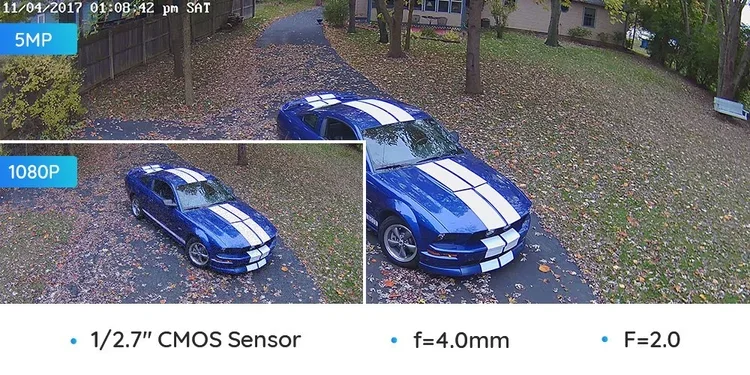
The most obvious sign your cameras need upgrading appears when you actually need to use the footage. You experience a theft, employee dispute, or customer injury claim, but when you review the recordings, faces appear as pixelated blurs, license plates are completely unreadable, and product details disappear in the poor resolution. This scenario plays out daily across Houston's small businesses operating with older analog systems or first-generation IP cameras offering 720p or lower resolution.
Why Low Resolution Fails Modern Business Needs
Standard definition cameras recording at 480p-720p resolution cannot capture the detail required for effective security in 2025. These systems produce footage where faces become recognizable only within 5-10 feet of the camera, license plates remain illegible beyond 15 feet, and product identification proves impossible in wider shots. Houston Police Department requires clear facial features and distinguishing characteristics for investigation purposes, standards that older cameras simply cannot meet.
Modern 4K cameras capture four times the detail of 1080p systems, allowing facial recognition at 30+ feet and license plate reading at 50+ feet. This resolution difference means the difference between "we have footage of someone stealing" and "we have clear images that led to an arrest and prosecution." Small retail businesses report 67% higher successful prosecution rates when providing 4K footage to law enforcement compared to standard definition recordings.
The lighting challenge compounds resolution problems for Houston businesses. Many older cameras lack proper low-light capabilities, producing completely black footage during evening hours or in dimly lit interior spaces like warehouses and back offices. Professional security camera installations now incorporate cameras with enhanced infrared capabilities and color night vision technology, ensuring usable footage regardless of lighting conditions.
What Grainy Footage Actually Costs Your Business
The hidden expenses of inadequate camera resolution extend far beyond the initial security system investment. Insurance companies increasingly require clear video evidence to process theft and liability claims, with many policies now specifying minimum resolution requirements. Businesses submitting grainy footage face claim denials or reduced settlements, effectively self-insuring incidents that should have been covered.
Employee theft accounts for 29% of retail shrinkage according to National Retail Federation data, but prosecution becomes nearly impossible without clear evidence showing the employee's identity, the stolen merchandise, and the act itself. Older cameras might show "someone" taking "something," but that's insufficient for termination without risking wrongful termination claims or for criminal prosecution. One Houston retail store owner discovered $15,000 in employee theft over six months but couldn't take action because their analog cameras produced footage too poor for positive identification.
Customer slip-and-fall claims represent another significant expense where video quality determines outcomes. Clear footage showing a customer deliberately spilling liquid then "falling" saves businesses tens of thousands in fraudulent claims. However, grainy footage that fails to capture these details leaves businesses vulnerable to settlements and increased liability insurance premiums. Personal injury attorneys actively seek out businesses with poor camera systems, knowing the footage will be insufficient to dispute their clients' claims.
Sign #2: Your Cameras Constantly Disconnect or Go Offline
Nothing undermines security confidence faster than discovering your cameras weren't recording during a critical incident. You experience a break-in, only to find gaps in footage because cameras disconnected overnight. You need to verify a customer's complaint, but that particular camera went offline three days ago and nobody noticed. This reliability problem plagues WiFi camera systems and aging equipment, creating security coverage gaps that expose your business to theft, liability, and operational losses.
Understanding Camera System Reliability Problems
WiFi security cameras suffer inherent connectivity issues that wired POE camera systems avoid entirely. Wireless cameras compete with dozens of other devices for network bandwidth, including point-of-sale systems, customer WiFi, employee phones, and smart thermostats. Houston businesses in brick buildings or those with metal construction face additional WiFi challenges, as thick walls and metal studs severely degrade wireless signals.
Network congestion during peak business hours causes WiFi cameras to drop connections or reduce video quality to maintain the connection. A restaurant operating WiFi cameras discovers recording gaps during lunch and dinner rushes when customer phones flood the network. A retail store's cameras go offline during holiday shopping periods when network traffic peaks, precisely when surveillance matters most. These aren't occasional technical glitches, they're predictable failures that create systematic security vulnerabilities.
Battery-powered WiFi cameras introduce additional failure points that wired systems eliminate. Houston's intense summer heat, with temperatures exceeding 100°F regularly from June through September, drains batteries 40-60% faster than manufacturer specifications suggest. Cameras that should last 3-6 months between charges require replacement every 4-8 weeks, and any delay in recharging creates coverage gaps. One Galleria-area boutique lost three cameras to battery failures during a heat wave, leaving the business completely unmonitored for five days before staff noticed.
The Business Impact of Unreliable Security Coverage
Coverage gaps from unreliable cameras create problems extending well beyond missed security footage. Employee behavior changes when they know cameras frequently go offline, with studies showing that employee theft incidents increase 35-50% in businesses with notoriously unreliable surveillance systems. Staff members learn to identify when cameras are offline, either through indicator lights or by checking the network, and time their misconduct accordingly.
Insurance implications prove equally serious. Many commercial insurance policies include surveillance system operation requirements, with coverage potentially voided if cameras weren't functioning during an incident. An insurance adjuster reviewing a theft claim asks the obvious question: "Why weren't your cameras recording?" The answer "they go offline sometimes" effectively admits that you were not maintaining required security measures, potentially invalidating coverage for that incident and future claims.
Operational monitoring suffers when camera systems prove unreliable. Forward-thinking Houston businesses use security camera footage for non-security purposes including customer traffic analysis, employee productivity monitoring, and process optimization. However, these business intelligence applications require consistent, reliable recording. Intermittent connectivity means unreliable data, making the cameras useless for anything beyond basic security, when they happen to be working.
The compounding effect of unreliable systems particularly impacts multi-camera installations. If individual cameras have 85% uptime (offline 15% of the time), a four-camera system provides full coverage only 52% of operating hours. Eight cameras with that same reliability deliver complete coverage just 27% of the time. This mathematical reality means businesses think they have comprehensive security when they actually have massive blind spots most of the time.
Experiencing Camera Connectivity Issues?
Stop losing critical footage to unreliable WiFi cameras. Savvy Surveillance specializes in rock-solid POE camera installations that deliver 99.9% uptime, even during Houston's most challenging weather conditions.
Get Your Free System AssessmentSign #3: You Can't Access Cameras Remotely or Footage Is Stored Locally Only
Modern business ownership demands mobility and real-time information access. You're at a supplier meeting when your manager calls about a customer dispute. You're home sick when an alarm triggers at your business. You're on vacation when your bank flags suspicious transactions. In each scenario, instant camera access provides crucial information for immediate decision-making, but older security systems trap footage on local recorders accessible only from on-site computers.
The Limitations of Local-Only Storage Systems
Traditional DVR and older NVR systems store all footage on physical hard drives located at your business, requiring on-site computer access to review recordings. This approach creates multiple vulnerabilities that modern business operations cannot tolerate. Physical recorder theft during break-ins eliminates all evidence of the crime, a tactic increasingly common among Houston thieves who have learned to identify and steal recording equipment before targeting inventory or cash.
Local storage introduces single points of failure that can destroy months of footage instantly. Hard drive failures occur without warning, with business-grade drives typically lasting 3-5 years under continuous recording conditions. Houston's humidity and heat accelerate drive failures, and most businesses discover the problem only when they need footage from yesterday and find the recorder stopped working three weeks ago. Without redundancy, that footage is permanently lost.
The operational constraints of local-only systems significantly impact business efficiency. Managers cannot verify opening and closing procedures without visiting the business. Owners cannot monitor employee performance from home. Multi-location businesses cannot centrally monitor all properties. Every footage review requires someone physically present at a computer connected to the recording system, turning simple 5-minute checks into 45-minute trips across Houston traffic.
Benefits of Modern Cloud and Remote Access Systems
Contemporary security systems provide remote access through mobile apps and web browsers, allowing instant footage review from anywhere with internet connectivity. You receive a motion alert notification, open the app on your phone, and view live footage within seconds. A customer claims they were injured in your parking lot yesterday afternoon, you pull up that time period from your phone during the conversation and can verify or dispute their claim immediately.
Cloud recording capabilities offer business continuity that local storage cannot match. Professional systems upload footage continuously to secure cloud servers, maintaining recordings even if on-site equipment is stolen, damaged, or destroyed. Houston businesses operating in hurricane-prone areas particularly benefit from this redundancy, as Hurricane Beryl's 2024 flooding damaged countless local recording systems but businesses with cloud backup retained all footage.
The operational advantages extend beyond security monitoring. Multi-location restaurant owners review camera footage during morning coffee, checking that all locations opened properly and prep work is proceeding on schedule. Retail managers monitor closing procedures from home, ensuring cash handling protocols are followed correctly. Warehouse supervisors verify deliveries remotely, confirming shipments were received and properly stored without leaving their desk.
Advanced systems enable AI-powered alerts that traditional local storage cannot deliver. Modern cameras detect specific activities like someone loitering in your parking lot after hours, accessing restricted areas without authorization, or remaining in your business after closing time. You receive instant alerts with video clips, allowing immediate response rather than discovering problems hours or days later when reviewing footage.
Sign #4: Your System Can't Distinguish Between Customers and Real Threats
Your phone buzzes with yet another motion alert. Someone triggered the camera again. You open the app, and it's just a customer walking past the entrance, the same false alarm that happened six times already this morning. Eventually you start ignoring these notifications because 95% are meaningless, which means you miss the alert when something actually requires attention. This is the curse of older camera systems with basic motion detection and no intelligence to differentiate between routine activity and legitimate security concerns.
The False Alarm Problem and Alert Fatigue
Basic motion detection triggers on any movement within the camera's field of view, creating dozens or hundreds of irrelevant alerts daily for busy Houston businesses. Every customer entering the store generates an alert. Every employee walking through a hallway triggers notification. Every tree branch moving in the wind outside produces a false alarm. Within days, business owners and managers develop "alert fatigue," ignoring all notifications because the signal-to-noise ratio has become unusable.
This learned behavior of ignoring alerts creates precisely the security vulnerability the cameras were meant to prevent. When an actual security incident occurs, the alert gets dismissed along with the 50 other notifications that day. One Katy retail store owner received a motion alert at 3 AM showing someone forcing open the back door, but deleted the notification without viewing it because they assumed it was another false alarm. The business lost $12,000 in electronics inventory that night because the owner didn't realize an actual break-in was in progress.
The productivity cost of false alarms extends beyond ignored security alerts. Managers waste hours weekly reviewing meaningless footage, checking why the camera in the stockroom kept triggering alerts (it was shadows from a swaying tree outside). Security companies charge false alarm fees when basic motion detection repeatedly sends police to your business for non-events. Employees become desensitized to alarm sounds, continuing their work rather than investigating when alarms trigger.
How Modern AI Detection Solves Alert Fatigue
Contemporary security camera systems incorporate artificial intelligence that distinguishes between different types of movement and activity. These systems recognize humans versus animals versus vehicles versus shadows and swaying vegetation. You configure the camera to alert only for human detection in your parking lot after closing, eliminating notifications for passing cars, stray cats, and wind-blown trash.
Advanced AI capabilities enable person recognition, vehicle detection, and even specific behavior identification. Cameras can distinguish between someone walking normally through your parking lot versus someone crouching between cars examining door handles. The system recognizes when someone lingers in one location for extended periods, a behavior pattern associated with theft planning. It detects when individuals access restricted areas, alerting you to employees entering offices or storage rooms where they don't belong.
Smart detection dramatically reduces false alarms while increasing security effectiveness. Houston restaurant owners configure cameras to ignore customer traffic during business hours but alert immediately when any person appears after closing. Retail stores set up perimeter alerts that trigger only when someone approaches delivery doors outside receiving hours. Warehouse businesses receive notifications when vehicles enter the property on weekends when no deliveries are scheduled.
The integration capabilities of AI-powered cameras extend their value beyond security monitoring. Systems can count customers entering your business, providing real-time traffic data for staffing decisions. They track peak activity periods, helping you optimize employee schedules. Some installations integrate with point-of-sale systems, flagging when register drawers open without corresponding sales transactions. This convergence of security and business intelligence transforms cameras from simple loss prevention tools into operational assets.
Tired of False Alarms Flooding Your Phone?
Upgrade to AI-powered cameras that distinguish between customers and actual security threats. Get instant alerts only when something truly requires your attention.
Explore Smart Detection TechnologySign #5: Your Cameras Are More Than 5 Years Old
The security camera technology landscape transforms dramatically every 3-5 years, making systems installed in 2020 or earlier functionally obsolete despite still producing images. Your cameras might technically work, recording footage and displaying video, but they lack the resolution, features, reliability, and integration capabilities that define effective business security in 2025. Operating outdated equipment doesn't just mean you're missing new features, it means you're inadequately protecting your business with yesterday's technology trying to address today's threats.
Technology Advancement and Security Effectiveness
Security camera capabilities have advanced exponentially in recent years. Cameras installed in 2019-2020 typically offer 1080p resolution at best, while 2025 systems provide 4K recording as standard. Those older cameras lack AI detection capabilities entirely, cannot integrate with modern access control systems, and offer limited cloud functionality. Their smartphone apps are clunky and unsupported, and cybersecurity vulnerabilities in outdated firmware create network risks that IT security professionals increasingly flag as unacceptable.
The comparison becomes stark when examining specific capabilities. Older cameras record continuously regardless of activity, filling storage with hours of empty footage and making it difficult to locate specific incidents. Modern systems use AI-triggered recording, capturing only when meaningful activity occurs and automatically tagging events for easy retrieval. An owner searching for footage of a delivery can find it in seconds rather than scrubbing through eight hours of recording.
Night vision technology improvements particularly impact Houston businesses operating evening and overnight hours. Cameras from 2020 and earlier use infrared LEDs producing black-and-white footage with limited range. Current generation cameras offer color night vision with enhanced sensitivity, capturing full-color images in extremely low light. For restaurants, bars, and 24-hour facilities, this upgrade means the difference between "someone in dark clothing" and "male in red shirt and blue jeans with distinctive tattoo on left forearm."
The Hidden Costs of Operating Outdated Systems
Older camera systems impose ongoing costs that businesses often fail to calculate when deciding whether to upgrade. Maintenance expenses increase as equipment ages, with cameras requiring more frequent service calls and component replacements. Hard drives fail more frequently in aging recording equipment. Power supplies deteriorate. Camera housings crack and allow moisture intrusion. These incremental repair costs accumulate quickly, often totaling more than half the cost of complete system replacement over 2-3 years.
Cybersecurity vulnerabilities in outdated cameras pose serious business risks that extend beyond security footage. Hackers actively target older IP cameras with known security flaws, using them as entry points to access business networks. Once inside, they can intercept credit card transactions, steal customer data, or deploy ransomware encrypting your business files. Houston small businesses increasingly face cyber insurance requirements mandating updated security equipment with current firmware, making outdated cameras not just a security issue but a compliance problem.
Insurance companies recognize that outdated security systems provide inadequate protection, and policy premiums reflect this risk assessment. Some insurers now offer discounted rates for businesses with modern security camera installations featuring specific capabilities like remote monitoring, cloud storage, and high-definition recording. Conversely, businesses operating obviously outdated equipment may face higher premiums or coverage limitations acknowledging the elevated risk those properties present.
When to Consider Complete System Replacement
System age alone doesn't necessarily mandate complete replacement, but several factors indicate when upgrading makes more financial and operational sense than maintaining aging equipment. If your cameras are 7+ years old, replacement usually proves more economical than continued maintenance and piecemeal upgrades. The technology gap has become too wide, and these systems cannot integrate with modern features that businesses increasingly require.
Businesses planning expansions or renovations should consider complete security system upgrades during the project. Adding new cameras to outdated recording systems creates mixed-resolution footage that's difficult to manage and review. The new cameras cannot leverage AI capabilities if the recorder doesn't support those features. Installing a completely new system during renovation avoids these compatibility issues and ensures consistent performance across all cameras.
Changes in business operations often reveal that current camera placement and capabilities no longer match security needs. A retail store that has moved high-value merchandise to a different section discovers existing cameras don't cover the new location adequately. A restaurant that has added outdoor dining needs weatherproof cameras with different specifications than interior models. Rather than trying to retrofit old systems to new requirements, complete replacement provides opportunity to design optimal coverage for current operations.
Understanding ROI: What Security Camera Upgrades Actually Deliver
The return on investment from security camera system upgrades extends well beyond prevented thefts and resolved disputes. Modern surveillance provides business intelligence, operational insights, and risk mitigation that older systems cannot deliver. Houston small businesses report multiple benefit categories that justify upgrade investments within 12-24 months through direct savings, loss prevention, and operational improvements.
Quantifiable Financial Returns
Direct theft prevention provides the most obvious and measurable return on security camera investments. Small businesses lose 5% of annual revenue to employee and external theft according to U.S. Chamber of Commerce data, with retail establishments experiencing even higher losses. Installing effective surveillance systems reduces these losses by 35-50% according to multiple industry studies. A Houston retail store with $500,000 in annual revenue experiencing typical 5% shrinkage (losing $25,000) could reduce losses to $12,500-16,250 through effective surveillance, saving $8,750-12,500 annually.
Insurance claim success rates improve dramatically with high-quality camera footage. Businesses with clear video evidence experience 78% claim approval rates compared to 45% for those submitting poor quality or no footage. The average successful theft or property damage claim returns $8,000-15,000 to Houston small businesses according to local insurance agent data. One Upper Kirby restaurant avoided a $35,000 slip-and-fall lawsuit settlement by providing clear footage showing the customer deliberately caused the incident.
False alarm reduction delivers ongoing savings that accumulate quickly. Houston Police Department charges businesses for excessive false alarms, with fees ranging from $50 for the first false alarm to $250+ for repeated incidents. Security companies charge monthly fees averaging $30-50 for monitoring services that repeatedly send false alerts. Doorbell camera systems with intelligent detection eliminate most false alarms, saving $400-800 annually while improving emergency response effectiveness.
Operational and Employee Benefits
Security cameras influence employee behavior in ways that improve productivity, safety, and customer service. Multiple studies demonstrate that visible surveillance reduces employee theft by 35-50% simply through deterrence, but the impact extends to other behaviors as well. Employees follow safety protocols more consistently when monitored. They engage with customers more professionally when aware of recording. They adhere to opening and closing procedures with greater reliability when verification is possible.
Manager efficiency improves substantially with remote camera access capabilities. A Houston restaurant group with four locations reports saving 6-8 hours weekly of manager travel time by handling routine oversight remotely through camera review rather than requiring physical site visits. Warehouse managers verify inventory counts and loading procedures from their office rather than walking the facility repeatedly. Retail supervisors can monitor multiple stores simultaneously, identifying staffing or procedural issues that require attention.
Training and quality assurance applications transform cameras from security tools into operational assets. Restaurants review footage to demonstrate proper food handling and service techniques to new employees. Retail stores identify high-performing sales associates and record their customer interactions for training purposes. Service businesses verify that cleaning and maintenance protocols are followed consistently. This training value provides ongoing benefits that continue delivering returns long after the security investment is recovered.
Risk Mitigation and Liability Protection
Legal protection from frivolous claims represents one of the most valuable but hardest-to-quantify benefits of modern security systems. Personal injury attorneys actively seek businesses without adequate surveillance, knowing these targets will settle rather than risk trials without video evidence. Businesses with comprehensive camera coverage and high-quality footage deter many of these opportunistic claims and successfully defend against those that proceed.
Workers' compensation fraud creates significant expenses for Houston small businesses, with fraudulent claims estimated at 10-15% of all workers' comp cases filed. Clear video footage documenting actual working conditions, incident circumstances, and employee behavior patterns provides crucial evidence that prevents fraudulent claims from succeeding. One Memorial area business avoided $45,000 in workers' comp payments by providing footage showing the claimed injury never occurred on their property.
Regulatory compliance documentation becomes straightforward with comprehensive video surveillance. Health department inspections, OSHA reviews, and local permit verification often require businesses to demonstrate specific protocols and conditions. Video footage provides undeniable evidence of compliance, protecting businesses from citations, fines, and operating restrictions. Industries with stringent regulations, including food service and healthcare, find this documentation capability particularly valuable.
⚠️ Don't Wait for the Next Incident
Every day with inadequate security cameras exposes your Houston business to theft, liability claims, and operational losses. The average small business loses 5% of annual revenue to preventable theft.
Schedule your free security assessment today. Let Savvy Surveillance show you exactly where your current system is failing and how modern technology protects your investment.
Contact Us NowMaking the Upgrade Decision: What Houston Small Businesses Need to Know
Recognizing that your current security system needs upgrading is just the first step. The next question becomes: what specific improvements will address your business's unique vulnerabilities and operational requirements? Houston small businesses face distinct security challenges based on location, industry, operating hours, and property characteristics. Understanding these factors helps you design an upgrade that delivers maximum protection and return on investment.
Assessing Your Current Security Gaps
Begin by honestly evaluating your existing system's shortcomings. Review recent incidents and ask yourself whether your cameras provided useful information. Could you identify the person who entered your restricted area? Could you verify the delivery driver's claim about package condition? Could you confirm what time your closing manager actually locked the doors? Each gap represents a specific upgrade requirement for your new system.
Analyze crime patterns in your specific Houston neighborhood. The Houston Police Department crime statistics provide detailed data by police beat showing theft, burglary, vandalism, and other incidents. Midtown businesses face different challenges than Greenspoint operations. Upper Kirby retail experiences different crime patterns than East Houston warehouses. Understanding your location's specific risks helps you prioritize coverage areas and select appropriate camera specifications.
Consider your business's unique operational patterns and vulnerabilities. Restaurants face specific theft risks during cash handling and closing procedures. Retail stores need merchandise protection and customer interaction monitoring. Warehouses require coverage of loading docks and inventory storage. Service businesses focus on customer areas and employee work stations. Your industry and specific business model determine optimal camera placement, types, and features.
Professional Installation Versus DIY Approaches
The installation approach significantly impacts system effectiveness, reliability, and long-term satisfaction. Professional installation through experienced companies like Savvy Surveillance provides comprehensive service including site assessment, optimal camera placement, proper mounting ensuring weather resistance and vandal deterrence, and integration with existing business systems. Experienced installers understand Houston-specific requirements like hurricane-resistant mounting and protection against intense summer heat that damages equipment.
DIY security camera systems initially appear to save money but often create long-term problems that exceed any initial savings. Common DIY issues include cameras positioned incorrectly failing to capture needed angles, inadequate network configuration causing connectivity problems, improper power supply leading to equipment failures, and lack of professional weatherproofing allowing moisture damage. Houston's climate challenges, including intense humidity, frequent storms, and extreme heat, particularly impact DIY installations lacking proper equipment and installation techniques.
The technical knowledge required for effective security camera installation extends beyond simple mounting and power connections. Network configuration for IP camera systems requires understanding of bandwidth requirements, VLAN setup for security isolation, port forwarding for remote access, and quality of service settings ensuring cameras maintain connectivity during high network usage. Professional installers handle these technical requirements correctly, while DIY installations frequently suffer connectivity and performance issues from improper network setup.
Planning Your Security Camera Upgrade
Start with clear objectives defining what you want your upgraded system to accomplish. Do you primarily need theft prevention and evidence for prosecution? Are you focused on employee monitoring and productivity? Do you need customer traffic analysis and business intelligence? Different objectives require different camera types, placements, and features. A system designed primarily for parking lot security looks very different from one optimized for point-of-sale monitoring.
Budget appropriately for effective security camera systems. While specific pricing varies based on camera count, desired features, and installation complexity, Houston small businesses typically invest $2,000-8,000 for comprehensive systems covering 4-8 cameras with professional installation and modern features. This represents 1-2% of annual revenue for most small businesses, a modest investment compared to the 5% revenue loss typical from inadequate security.
Consider future expansion when designing your upgraded system. Will you open additional locations? Are you planning facility expansions? Might you add specific monitoring capabilities like access control integration or point-of-sale system connection? Choose recording equipment and network infrastructure with capacity exceeding your immediate needs, making future additions straightforward rather than requiring complete system replacement.
Taking Action: Next Steps for Houston Business Owners
You recognize the signs indicating your business needs a security camera upgrade. You understand the financial and operational benefits that modern surveillance provides. Now you need to move from consideration to implementation, protecting your business with effective security technology rather than continuing to operate with outdated equipment creating false confidence and actual vulnerabilities.
The most important first step involves honest assessment of your current situation. Document specific incidents where your existing cameras failed to provide needed information. Calculate your actual losses from theft, fraudulent claims, and operational inefficiencies. Review your insurance policies to understand coverage requirements and potential premium reductions from upgraded security. This analysis clarifies your actual costs of continuing with inadequate surveillance versus investing in effective solutions.
Research available options specific to Houston business requirements. Not all security camera systems perform equally in Houston's challenging climate conditions. Extreme heat damages electronics, intense humidity causes corrosion, and hurricane-force winds destroy improperly mounted equipment. Work with security companies experienced in Houston installations who understand these local challenges and specify equipment rated for local environmental conditions.
Schedule consultations with professional security camera installation companies to get specific recommendations for your business. Reputable companies provide site assessments identifying optimal camera placement, recommending appropriate equipment for your specific needs, and explaining how proposed systems address your documented security gaps. These consultations should be free and should result in detailed proposals you can compare across multiple providers.
When evaluating proposals, look beyond just equipment specifications and total investment numbers. Consider the company's Houston experience and local reputation. Verify that they provide comprehensive service including proper permits, professional installation meeting building and electrical codes, thorough testing and training, and ongoing support after installation. The lowest-cost proposal often becomes the most expensive over time when poor installation leads to repeated service calls and premature equipment replacement.
Don't delay security improvements until after you experience a significant incident. The Houston businesses facing the largest losses from inadequate security are those that knew they needed upgrades but postponed action. One break-in, one unresolved employee theft situation, one fraudulent liability claim typically costs far more than comprehensive security system upgrades. Protecting your business, employees, and investment is not an expense, it's an essential business requirement in Houston's current environment.
Modern security camera technology provides Houston small businesses with affordable, effective tools for protection and operational improvement. If your current system exhibits any of the five warning signs discussed in this guide, grainy footage, reliability problems, local-only storage, excessive false alarms, or simply age over five years, then upgrading is not optional, it's essential for protecting your business in 2025 and beyond.
Frequently Asked Questions
How long do security camera systems typically last?
Professional-grade security camera systems last 7-10 years under normal operating conditions, though Houston's intense heat and humidity may reduce lifespan to 5-7 years for outdoor equipment. However, technological advancement often makes systems functionally obsolete before physical failure, with major capability improvements occurring every 3-5 years. Most Houston businesses plan for camera upgrades every 5-7 years to maintain current capabilities rather than waiting for complete system failure.
Can I add new cameras to my existing old system?
Adding modern cameras to old recording systems creates compatibility problems that usually outweigh any short-term savings. New cameras operate at different resolutions than older equipment, forcing the system to downgrade image quality to the lowest common denominator. Advanced features like AI detection and smart alerts won't function if the recorder doesn't support those capabilities. Additionally, mixing camera generations creates inconsistent footage that's difficult to review and may not meet insurance or legal requirements for evidence.
Will security cameras really reduce theft in my business?
Research consistently demonstrates that visible, operational security cameras reduce theft through deterrence and enable prosecution of incidents that occur. Studies show external theft (shoplifting) decreases 16% after camera installation, while properly monitored systems reduce employee theft 35-50%. However, effectiveness depends entirely on having adequate coverage, sufficient image quality for identification, and reliable operation. Outdated or poorly designed systems provide minimal deterrent value because experienced thieves recognize inadequate surveillance and know they won't be identified.
What's the minimum camera resolution I should consider for business use?
Modern business security requires minimum 1080p resolution, with 4K (2160p) strongly recommended for areas where facial identification, license plate reading, or product identification matter. Lower resolution cameras cannot capture detail necessary for prosecution, insurance claims, or dispute resolution. The actual answer depends on camera placement distance from subjects, if a camera is positioned 30+ feet from areas you need to monitor, even 4K may prove insufficient for detailed identification.
How much internet bandwidth do modern security cameras require?
IP camera bandwidth requirements vary significantly based on resolution, frame rate, and compression settings. A single 4K camera typically uses 8-12 Mbps upload bandwidth when streaming continuously, though most business systems record locally and upload only key footage to cloud storage, reducing bandwidth needs to 1-2 Mbps per camera average. For a typical 4-8 camera system, Houston businesses should have minimum 50-100 Mbps internet service with business-class reliability. Inadequate bandwidth causes recording gaps and connectivity problems that undermine system effectiveness.
Ready to Upgrade Your Business Security?
Savvy Surveillance has helped hundreds of Houston small businesses transition from outdated, unreliable camera systems to professional-grade security that actually protects their investment. FREE lifetime service. NO monthly monitoring fees. Reolink official partner.
Start Your Free Consultation